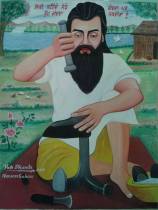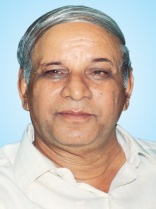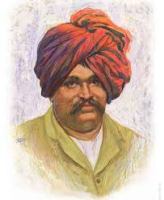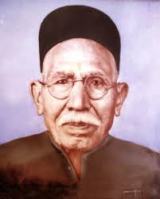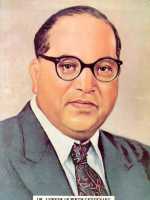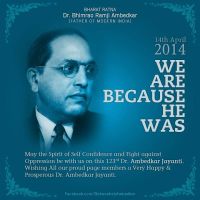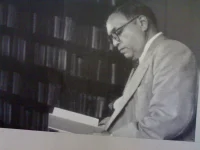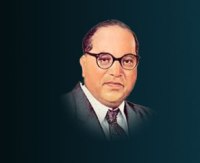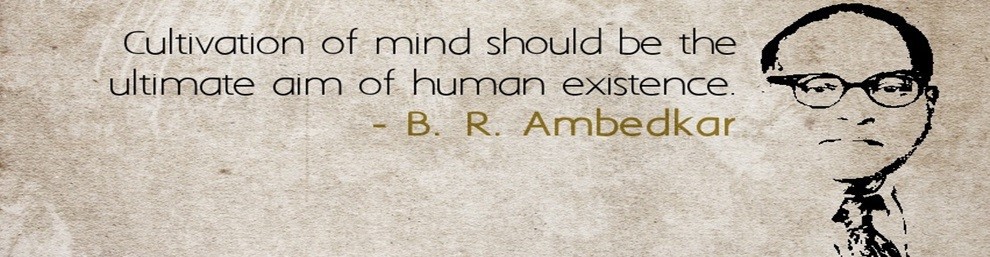
Our ultimate goal is to become the governing class to rule this country. Go and write this goal on the walls of your houses so that every day you will remember it. - Dr. Ambedkar

Dr. B. R. Ambedkar on Republic Day (26th January)

January 22, 2012 1 comment

“On 26th January 1950, we are going to enter into a life of contradictions. In politics, we will have equality and in social and economic structure, continue to deny the principle of one man one value. How long shall we continue to live this life of contradictions? How long shall we continue to deny equality in our social and economic life? If we continue to deny it for long, we will do so only by putting our political democracy in peril. We must remove this contradiction at the earliest possible moment else those who suffer from inequality will blow up the structure of democracy which this Constituent Assembly has so laboriously built up.”

“I feel that the constitution is workable, it is flexible and it is strong enough to hold the country together both in peacetime and in wartime. Indeed, if I may say so, if things go wrong under the new Constitution, the reason will not be that we had a bad Constitution. What we will have to say is that Man was vile.”

“There is no nation of Indians in the real sense of the world, it is yet to be created. In believing we are a nation, we are cherishing a great delusion. How can people divided into thousand of castes be a nation? The sooner we realise that we are not yet a nation, in a social and psychological sense of the world, the better for us.”

“Independence is no doubt a matter of joy. But let us not forget that this independence has thrown on us greater responsibilities. By independence, we have lost the excuse of blaming the British for anything going wrong. If hereafter things go wrong, we will have nobody to blame except ourselves. There is a greater danger of things going wrong. Times are fast changing.”

“Our object in framing the Constitution is rally two-fold:

(1) To lay down the form of political democracy, and

(2) To lay down that our ideal is economic democracy and also to prescribe that every Government whatever is in power shall strive to bring about economic democracy. The directive principles have a great value, for they lay down that our ideal is economic democracy.”

Related articles

P.S.: In case you liked the above information, please share it with your friends.

Achievements of “Bahujan Samaj Party” – 100s Reason to Vote for BSP

January 20, 2012 3 comments
–A great post by my friend Mr. Sandip Patil from Mumbai.
Hon’ble Ms. Mayawati Ji-led government formed on 13 May, 2007 in Uttar Pradesh, after its four-year term, has kindled a new ray of “bright” future among the general public in the State, especially the SC/STs, backwards, religious minorities and upper-caste poor in respect of law and order and crime control together with development and public welfare activities.
This very government, by pursuing the path shown by great saints, gurus and seers born in backward classes, especially Mahtma Jotiba Phule, Chhatrapati Shahuji Maharaj, Shri Narayana Guru, Baba Saheb Dr. Bhimrao Ambedkar and Manyawar Shri Kanshiram Ji in development and public welfare activities with government following the policy of “Sarvajan Hitay – Sarvajan Sukhay”.

Vote and Support “Bahujan Samaj Party”

Besides, to honour these backward-born great “Saints, Gurus and Seers”, various magnificent spots, memorials, museums, parks, etc have been constructed in the state, on which the total budgeted government amount spent is even less than 1%; the remaining funds having spent on law and order, crime control, development and public welfare activities.

In the last four years, the central government did not release on time its share payable to the state totalling Rs. 21,385 crore. If this amount had been paid by the centre in time, achievements of the state government could have been far far better.

Not only this, the “special economic package’ of Rs. 80,000 crore sought from the central government for the total development of the state, especially Bundelkhand and Poorvanchal in view of the poor and pitiable economic conditions inherited from the previous governments, no money was received from the central government at all.

Thereafter, under government’s new development strategy several major projects /schemes on the PPP-model, like the Ganga Express-way, Yamuna Express-way and Upper Ganga canal were prepared to spur development in the state in which no central investments were involved except a departmental ‘no objection ‘ from them; the centre, however, did not cooperate even in this matter.

And yet, with “ correct mobilization of resources and improved financial management” the state government generated an atmosphere

Development, notable achievements of which are enumerated below:

Few rare pictures of Behan Mayawati and Sahib Kanshi Ram Ji

January 16, 2012 1 comment

Mayawati, extreme right with her parents Prabhu Das Dayal and Ramrati Devi and five of her seven siblings in the 1960s. Below On her 47th birthday Behan Mayawati with her mentor Sahib Kanshi Ram Ji.


Behan Mayawati giving a lecture and Sahib Kanshi Ram Ji sitting at the front row (middle)

Read more…

“I Have a Dream” for Dalits of India

January 11, 2012 Leave a comment

There is no nation of Indians in the real sense of the world; it is yet to be created. In believing we are a nation, we are cherishing a great delusion. How can people divided into thousand of castes be a nation? The sooner we realize that we are not yet a nation, in a social and psychological sense of the world, the better for us. – Dr B R Ambedkar

As all of us welcome year 2012 and greet each other with open arms, I visualise a dream. I have always said that I am a dreamer. Yes, I do have a dream, a dream (Begumpura) that Guru Ravidas saw about 650 years ago for everyone or a dream (Utopia) that nourished Dr Ambedkar or I have a dream that Martin Luther King Jr. saw for the blacks of America. Here is my dream for Dalits of India almost along the same lines what Guru Ravidas, Dr Ambedkar, Martin Luther King Jr. and many others saw for better world.

I have a dream that one day; Dalits will break the chains of caste discrimination and free themselves from the chains of slavery that has ruined Dalits for thousands years. Yes, it’s my dream to see casteless society. I do also dream that Dalit houses won’t be set on fire or Dalits won’t be boycotted anymore. Dalits won’t be killed for the same name as of upper caste people or Dalits won’t be forced to change their names or Dalits won’t hide their names to escape caste discrimination. I also dream with open eyes that untouchability will become history and there will be no untouchable.

Searching for a Dream? (Photo Credit: Ravi Shankar Suman)

I have a dream that one day; for Dalits justice won’t be delayed or justice won’t be just another word or justice won’t be alien to Dalits. I anticipate that Dalits won’t be told to wait, wait and wait bit more for justice; a wait that always meant never. A day won’t be far when everyone will be treated equal and will live with dignity and pride. That will be the day, when Buddha will smile upon India again!

I have a dream that one day; Dalit women won’t be paraded naked, raped or forced to commit suicide for nothing wrong. Not only the Dalit women but whole women society will not be forced to do menial jobs. Women won’t be disrespected, exploited, neglected or won’t be treated as a sex-object only in Indian society. I dream that one day, equality will come in all spheres and women suffering will come to end.

I have a dream that one day; Dalit students won’t be made to sit separately in classrooms, or won’t be discriminated and forced to commit suicide in schools and colleges. A day will come when Dalit students won’t be purified via sprinkling cow urine on them and Dalit students’ seats won’t be left unfilled in schools and colleges. No Dalit student will be forced to do cleaning work in schools, no student will deny food cooked by Dalit cook and Dalit students will be able to use the same playing grounds as other caste students do.

Read more…

Upcoming Movie: “Shudra – The Rising?”

January 5, 2012 2 comments

I believe till now everyone might have heard about the upcoming movie on Dalits of India, i.e. “Shudra – The Rising?” In case you have missed the news, here is the news! Movie is produced and directed by Sanjiv Jaiswal and movie will be of 120minutes. We all know we can’t express the pain and suffering of Dalits in 2hours movie but still I believe it’s an ideal runtime for a movie and it will be advantageous.

Movie: "Shudra- The Rising?" Poster

A bit of storyline:

Movie is based on story of 250million people born as untouchables (and today’s Dalits) in Hindu caste system and subjected to humiliation and slavery since ancient times. When aryans came to India with the intention of looting, they enslaved the peace loving natives. Manu – Hindu guru – imposed laws on untouchables and barred them from reading, writing and listening holy mantras. Natives were treated less than human, impure, unclean and were forced to do menial jobs.

In the movie you will see, Shudra denied water, (Dalits still fight for such rights) a Shudra child’s nose chopped off for chanting mantras, (Dalits are still not allowed to enter many temples in India), a pregnant Shudra women forced to sleep with upper caste people (Dalit women still are raped on Day to day basis in India) and many more heart touching scenes – the only crime of theirs – they are born untouchables.  Movie seems to be based on real events, if not real I bet, you might have heard such incidents once in a while in your life-time. It is believed that nature took ages to make man out of animal, but it took moments for certain men to make their fellow human animal again. “Shudra – The Rising?” highlights the depth that evil human mind can succumb, to cling on to power and supremacy.

Recently, the “Shudra – The Rising?” team has received screening Invitation for “Shudra – The Rising?” from South Asian Film Festival which will take place June 13-17, 2012, in Vancouver, and in the Fraser Valley, British Columbia, Canada.

My best wishes to the team

I strongly believe that movies on social issues should be made and given more emphasis. Sanjiv Jaiswal has chosen an important issue of caste discrimination, which has ruined millions lives and hopes. After watching trailers of movie, I can say that it’s a sincere effort by the team to put forward the caravan of Dr Ambedkar. I wish the team a grand success!

P.S.: Movie is going to release in Feb. 2012 and you can visit the movie site at http://www.shudrathefilm.com for latest updates. You can also follow producer and director – Sanjiv Jaiswal – on twitter at @sanjivjaiswal and join the facebook page of the movie at http://www.facebook.com/pages/SHUDRA-the-rising/102558246496607

Read more…

Right to Recall: A Dalit’s Viewpoint

January 1, 2012 3 comments

Few months ago, after raising the toast on the success of Jan Lokpal Bill, Anna & Co. started demanding right to recall, electoral reform and voicing pro-death penalty. Since then Anna is in controversies over his comments on Sharad Pawar’s slap-issue, over his treatment with drunken people in his village and then his comments on women and pregnancy pain. Anna’s latest stint with fast at Mumbai was unsuccessful. All these news remind me that in my previous articles, I’d promised to write on Right to Recall and Dalits. So, here I am.

I don’t want to discuss the cost of election, re-election and re-election because I do have other concerns, concerns much more important than the cost of election or re-election, such as how Right to Recall will affect Dalits-Bahujans. (I also don’t buy the argument that India is a poor country, especially when there is a hell lot of corruption.) I also don’t want to discuss how cumbersome this process of Right to Recall would be i.e. practical difficulties. It would be almost impossible for such a populated country like India to implement Right to Recall. (In the countries, where Right to Recall is working require certain number of signatures (about 70%) of people from the area where people are demanding to recall and then verification is also required for the signatures, only after that re-election takes place. And we also have to keep in mind that those countries (such as Venezuela and few states of USA) where “Right to Recall” is working do have much less population.) But, let’s ignore all these difficulties for the sake of argument and concentrate on few other concerns.

Three states of India, i.e. Punjab, Madhya Pradesh & Chhattisgarh already do have provisions to recall leaders at the local level. “The Punjab Panchyati Raj Act” says,

…no-confidence against a Sarpanch be made to the Block Development and Panchayat Officer by a two-thirds majority of the total number of Panches of the Gram Sabha.

Punjab’s Dalits get a raw deal; and this is deepening caste fissures in the State. Problem arises in the villages when few upper caste panches files no-confidence motion against the Dalit Sarpanch due to caste prejudices or those upper caste panches don’t want to see Dalit ruling them or the village. Getting two-third majority for influential upper caste panches is not a big deal. As the result of caste politics and money at the village level Dalits suffer.

Read more…

1st January,1818: The Battle of Bhima Koregaon

December 30, 2011 9 comments

If we wish to be free, we must fight. Shall we gather strength by irresolution and inaction? Is life so dear, or peace so sweet, as to be purchased at the price of chains and slavery? I know not what course others may take; but as for me, give me liberty or give me death. – Patrick Henry (March, 1775)

History of India is nothing but the struggle between untouchables and so called upper castes. However the Indian historians have always misled us by not showing the true face of Indian History.

The glorious victory of few hundred untouchable soldiers over numerically superior Peshwas army in the battle of Koregaon, fought on 1st January, 1818, is one such chapter in Indian history whose significance has been carefully hidden.

On that day, when many were busy celebrating the new year, a small force of 500 mahar (an untouchable caste in Maharashtra) soldiers in the British army were preparing for a war against the most brutal Indian state of that times – Brahmin Peshwa rulers of Pune, Maharashtra.

In the history books, this battle is considered an important one and is known as second Anglo-Maratha war that resulted in the total destruction of Peshwa kingdom and sealed the victory of British Empire in India. However, there is a different historical dimension to this war that all of us need to be aware of.

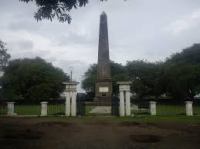
Bhima Koregaon Pillar: Honouring the Bravery of Untouchable Soldiers

 This war was also between the Indian untouchables (who were condemned to live a life so miserable that you might not find any parallels in the world history) and Brahminism (manifested through brahmin rulers from Pune).

 For mahar soldiers, this was not just another battle but it was their   battle for self-respect, dignity and against the supremacy of Manusmriti. And these soldiers, just 500 of them, defeated the Peshwa army of over 30,000 in just one day. Their victory against a mighty force is perhaps unparallel in Indian history.

 Maharashtrian society under brahmin’s rule followed worst form of social discrimination based on caste wherein the lower strata of society such as untouchables were confined to the stringent Brahmanical laws and subsequently their mobility and development were impaired.

The untouchables had to carry a broom stick attached to their backs so that when they enter into city, their footprints would not pollute the path. They were forced to put a pot around their neck to carry their spit in the pot. They were not allowed to hold any arms and education was completely barred. Untouchables were killed if they did not follow these restrictions. Bhima-Koregaon battle was the answer of the untouchables to the brahmin ruling class of the country.

Read more…

Manusmruti Dahan Din (25th December)

December 24, 2011 1 comment

By - Dr. K. Jamanadas

Today is Christmas, 25th of December. It is celebrated all over the Christian world as the birth of Jesus Christ. But for the whole world of Dalits, it is an important day as “Manu Smruti Dahan Din”, as it was on this day in 1927 that Manusmruti was publicly burned by Dr. Ambedkar, during the “Maha-Sangharsha” of Mahad Satyagraha, and is an important mile stone in Dalit struggle against Brahmanism. Let us all remember this day with pride.

Manuvadis had arranged that Ambedkar does not get a ground for meeting, but a Muslim gentleman, Mr. Fattekhan, gave his private land. They had arranged that no supplies of food, water or anything else could be bought, so everything was brought from outside by our men. The volunteers had to take a vow of five items:

1. I do not believe on Chaturvarna based on birth.

2. I do not believe in caste distinctions.

3. I believe that untouchability is an anathema on Hinduism and I will honestly try my best to completely destroy it.

4. Considering that there is no inequality, I will not follow any restrictions about food and drink among at least all Hindus.

5. I believe that untouchables must have equal rights in temples, water sources, schools and other amenities.

Dr. Ambedkar came from Bombay by boat “Padmavati” via Dasgaon port, instead of Dharamtar, though it is longer distance, because in the event of boycott by bus owners, they could walk down five miles to Mahad.

Some people later tried to say that Dr. Ambedkar decided to burn Manusmruti at the eleventh hour, as he had to withdraw the programme of drinking water from Chavadar Tank under court orders and persuasion by the Collector. That is not true, because right in front of the pendal of the meeting a “vedi” was created beforehand to burn Manusmruti. Six people were labouring for two days to prepare it. A pit six inches deep and one and half foot square was dug in, and filled with sandle wood pieces. On its four corners, poles were erected, bearing banners on three sides. Banners said,

1. “Manusmruti chi dahan bhumi”, i.e. Crematorium for Manusmruti.

2. Destroy Untouchability and 

3. Bury the Brahmanism.

On 25th December, 1927, at 9 p.m., the book of Manusmruti was kept on this and burned at the hands of Bapusahib Sahastrabuddhe and another five six dalit sadhus.

Read more…

“I, Phoolan Devi – The autobiography of India’s Bandit Queen”

December 21, 2011 1 comment

I wanted to prove that we all have our honour, whatever our origins, our caste, the colour of our skin or our sex. — Phoolan Devi

I was about sixteen years old the day Phoolan Devi was shot dead at Delhi. I don’t remember whether I know anything about her at that time, all I remember is that I had heard her name before. Maybe, I had read about her somewhere or watched her on television or my father had talked about her. So, the day she died I felt like low-caste people of India lost someone important. That’s all what I remember about the day, yes dated 25th July, 2001 the day Phoolan Devi was shot.

Days rolled and years passed when few days back I got my hands on the book named “I, Phoolan Devi – The autobiography of India’s Bandit Queen”. As, I was turning pages while reading the book my heart sank many times and every time same question came to my mind why us? Why low-caste people have to suffer in their own homeland, why? Is it because, low-caste people were born under the dark stars? When will we be able to live peacefully without being assaulted? (After reading the book, I also watched the movie named “Bandit Queen” by Shekhar Kapoor and I must admit that the movie shows just a fraction of the sufferings Phoolan Devi endured and what I hate the most about the Shekhar Kapoor and his movie is that he didn’t even dare to meet Phoolan Devi once for the movie!) I was born brought up in a village and I’ve witnessed the pain and suffering women have to undergo. While reading the book, I decided that I’ll review-cum-summary the book as a tribute to the Phoolan Devi for her courage and suffering in the hands of so called upper caste people.

Book, “I, Phoolan Devi – The autobiography of India’s Bandit Queen” is a true story of Phoolan Devi, as narrated to French authors Marie-Therese Cuny and Paul Rambali. Phoolan Devi was born into a family of Mallahs, considered lower caste, in the village named Ghura Ka Purwa (Uttar Pradesh). This is a story of a woman who stood against the brutality of Thakurs and woman who decided not to be docile Indian women. Phoolan Devi’s mother always encouraged her not to accept injustice. In Phoolan Devi’s own words:

“The poor must bow down and touch the feet of the rich. The poor eat a few grains of millet while the rich feast on mangoes. The pain of hunger in the belly of the poor produces fear and submission. I tried to submit, as my father said I should, but I was unable. I was like my mother. There was too much anger in me.” 

Even at the tender age of ten, she took fight with her cousin, Mayadin, who had grabbed her father’s land; she forced the Panchayat to reopen the land case. She fought with Mayadin when he tried to cut Neem tree, which belonged to her family. At the age of 10, she could hold snakes without fear. She was a brave fighter from the start, never accepted the degradation and kept dignity above everything. There were times when her family had nothing to eat and her mother cursed for giving birth to girls. Mallahs as other lower castes were expected to do all kind of worst jobs such as herding the Thakurs’ animals, cut grass for those animals, collect dung, massage Thakurian’s head, and the worst was they were not allowed to ask anything in return. If, anyone refused to do work for Thakurs, they were beaten; even Phoolan was beaten more than once for refusing to do menial chores for Thakurs.

Read more…

On Subramanian Swamy and His Article on Islamic Terrorism

December 12, 2011 7 comments

There is no nation of Indians in the real sense of the world; it is yet to be created. In believing we are a nation, we are cherishing a great delusion. How can people divided into thousand of castes be a nation? The sooner we realize that we are not yet a nation, in a social and psychological sense of the world, the better for us. – Dr B R Ambedkar

Last week, world’s number one university, Harvard, decided to exclude Janta Party’s leader Subramanian Swamy’s course from the Harvard summer school course.  This decision came after his hateful article in Daily News and Analysis (DNA) that appeared on 16th July,2011 under the heading of “How to wipe out Islamic terror”. (DNA has removed this article but you can still find the same article on many other sites) His removal from the course started the debate over the freedom of speech so, I decided to search his article and decide what is right and wrong. I won’t say his article is controversial but hateful because it’s full of hatred towards Muslims and minorities.

Few hateful parts from the article are:

The first lesson to be learnt from the recent history of Islamic terrorism against India and for tackling terrorism in India is that the Hindu is the target….

Hindus can’t accept to be killed in this halal fashion…

(I believe not only Hindus but people from every religion get killed in bomb blasts not only the Hindus, bombs can’t differentiate who is Hindu and who is not. Can they or might be Subramanian Swamy have figured out such a weapon, about which he will be happy to write in next article for sure? This statement is as flawed as it could be.)

Islamic terrorism is India’s number one problem…

(What about caste discrimination, hunger, poverty, corruption, unemployment, farmer suicides, Dalits being assaulted everyday etc? Are these in the list of Subramanian Swamy or he has forgotten about Malegaon blasts and Sadhvi Pragya Singh Thakur?)

If any Muslim acknowledges his or her Hindu legacy, then we Hindus can accept him or her as a part of the Brihad Hindu Samaj (greater Hindu society) which is Hindustan….

(I think Subramanian Swamy might know that why people converted to Islam and who are the Muslims of India. Muslims of India not other than the Untouchables (Dalits) of India, untouchables who converted to Islam just to avoid the brutality of Hindu Caste System. Almost 80-85% of Muslims are low caste people. I wonder why Subramanian Swamy hasn’t written against the caste system. If he might have written then Muslims may have some options before conversion.)

India that is Bharat that is Hindustan is a nation of Hindus and others whose ancestors were Hindus. Others, who refuse to acknowledge this, or those foreigners who become Indian citizens by registration, can remain in India but should not have voting rights (which means they cannot be elected representatives).

(I believe Subramanian Swamy might also know that Hindu is a new term coined recently, how it can be ancient, I wonder. He has a dream of Hindu-Rashtra, which is much more dangerous than the terrorism.)

While suggesting solutions to blasts, killings and terrorism he says:

Read more…

Follow

Get every new post delivered to your Inbox.

Join 615 other followers